
Pune | October 1, 2026
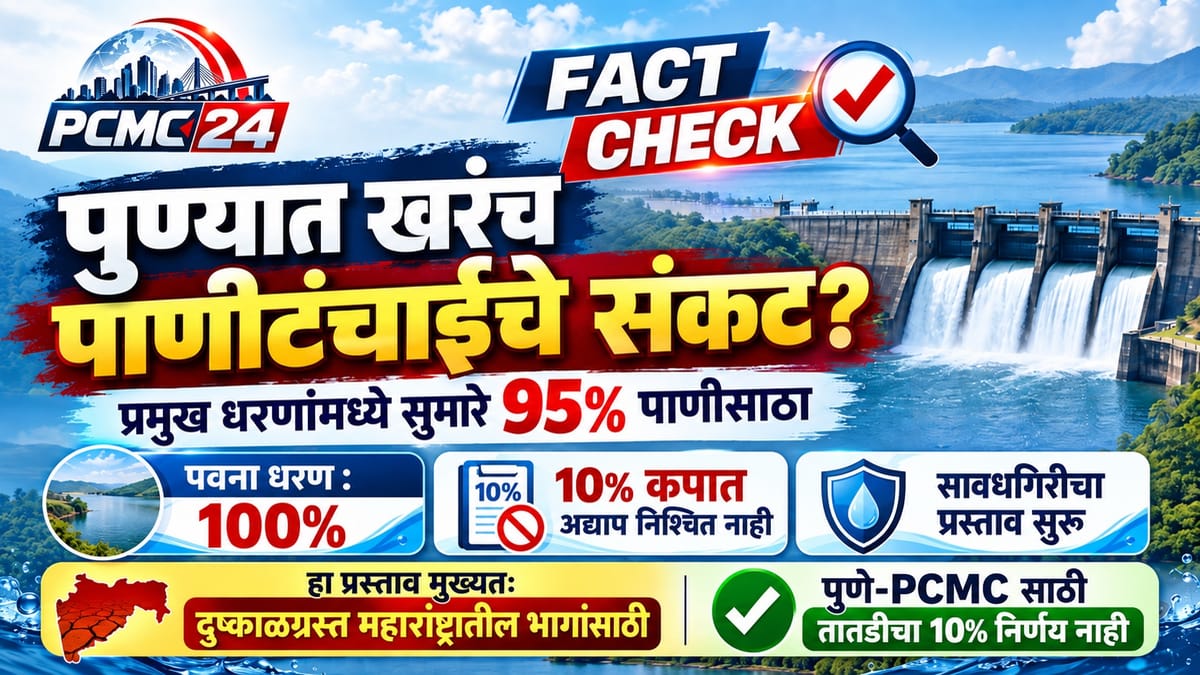
Reports about possible water cuts have raised concerns that Pune and Pimpri-Chinchwad may be heading towards an immediate water crisis. However, current reservoir figures present a different picture.
As of September 28, Pune district's large reservoirs were around 95% full. The Khadakwasla system comprising Khadakwasla, Panshet, Varasgaon and Temghar held approximately 27.78 TMC of water, or 95.30% of its total capacity.
For Pimpri-Chinchwad too, the storage situation remains strong, with Pavana Dam reported at 100% capacity.
Pune district also received around 1,074 mm rainfall during the monsoon, approximately 13% above its normal rainfall.
So why is the government discussing water cuts?
The reason is Maharashtra's wider drought situation. Statewide dam storage is considerably lower than last year and many areas of Marathwada, Vidarbha and rural Maharashtra are facing genuine water stress. Even within Pune district, small reservoirs were only around 32.68% full.
The Maharashtra government has therefore asked officials to examine a proposal for around 10% reduction in urban water supply as a precaution to conserve water for the coming months. The proposal is not yet a confirmed blanket 10% cut for Pune or PCMC and implementation is expected to depend on local scarcity conditions.
The important distinction is that Pune currently has strong major-reservoir storage, while Maharashtra simultaneously faces serious regional drought conditions.
Residents can still experience water shortages because of distribution problems, leakages, infrastructure limitations or local supply schedules even when dams have adequate water.
Therefore, saying that Pune and PCMC are currently 'running out of water' is not supported by the latest major-reservoir figures. At the same time, the statewide drought situation is real and precautionary conservation measures may still be introduced.
There is also no verified evidence at present linking these particular reports to any deliberate campaign by the tanker business.
The state government has said the 10% reduction is being considered as a precautionary measure, with a final decision dependent on feasibility and local conditions.


